Costs
Roof restoration cost: what each step costs, and when it is worth it
Yakka Labour's 2026 examples put a single-storey roof restoration around $4,500 to $11,000. What "restoration" includes varies: identify the repairs, preparation and any coating, then check that the proposed work suits the actual roof condition.
What a restoration includes
- Assessment and specified repairs: identify the roof material, condition and defects before selecting work.
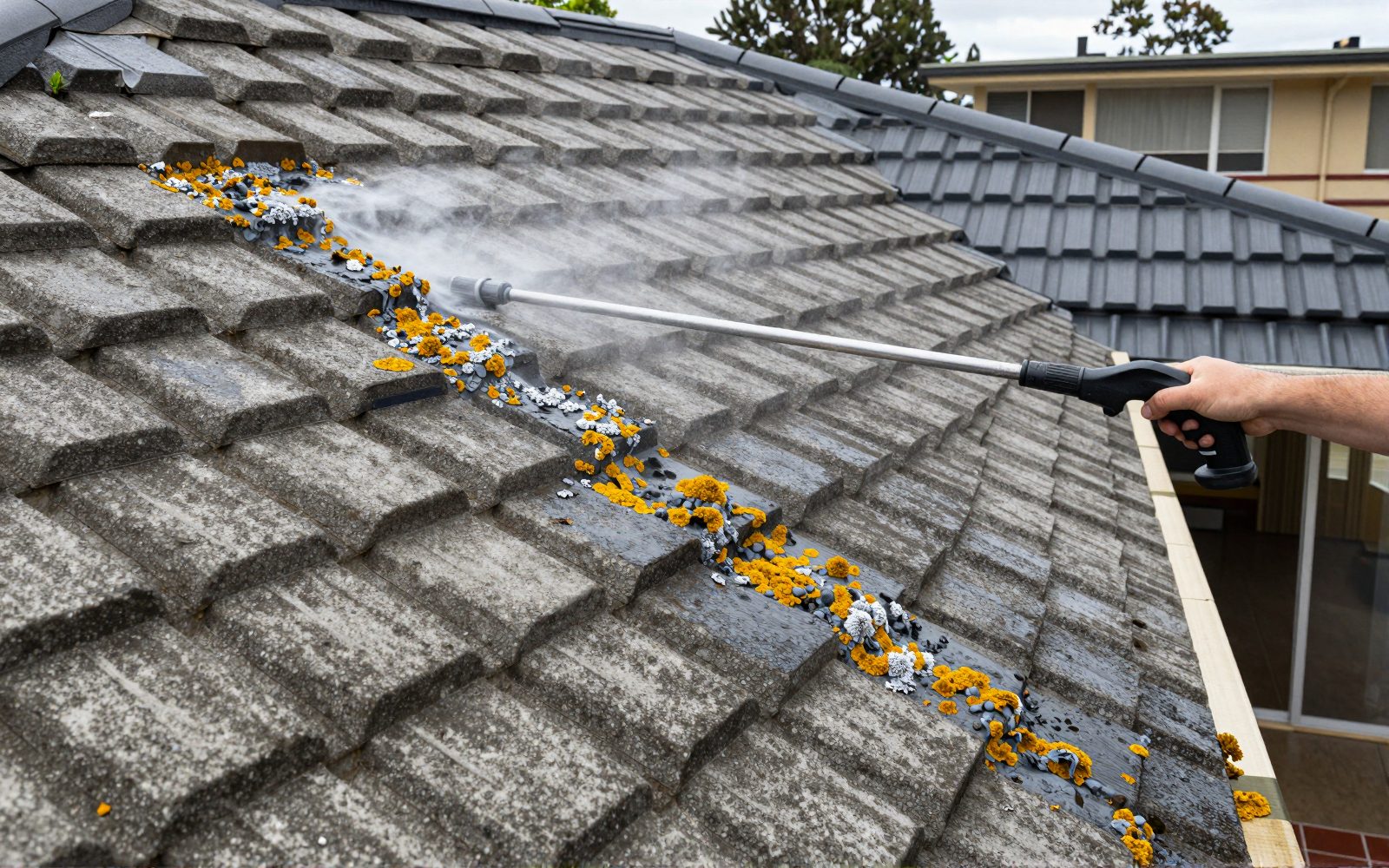
- Suitable cleaning and preparation: follow the applicable roof and product guidance, not a universal pressure-cleaning instruction. Monier advises against pressure washers for its roof tiles.
- Any proposed finish: specify a suitable coating system only where appropriate, with its preparation and application requirements. A cosmetic finish is not a substitute for a repair.
What it costs
Yakka Labour puts a restoration at about $4,500 to $11,000 for a single-storey home in 2026. The coating stage alone is roof painting, at about $15 to $35 per square metre: see roof painting cost.
When it is worth it
The inspection must establish whether the existing roof is suitable to retain and which work addresses the identified condition. Compare an itemised repair, restoration and replacement where relevant. A lower headline price does not make restoration the right answer for an unsuitable covering, nor does a tired appearance alone establish that replacement is needed.
"Restoration" is not one standard package
One offer may focus on cleaning and appearance. Another may include identified tile or metal repairs, ridge work, junctions and a coating. A third may leave several of those items out. Before comparing totals, ask each provider to identify the components of the proposed work.
The word does not establish the condition of the retained roof or guarantee that every leak will be resolved. An inspection finding and a written scope are more useful than a package name such as premium restoration. Keep appearance, repair and longer-term maintenance as separate parts of the discussion.
For a current leak, first use roof leaking for the immediate response and arrange an appropriate investigation. Then check that the permanent proposal identifies the cause it addresses. A new finish should not be treated as evidence that the route of water entry has been found.
Compare repair, restoration and replacement
| Option | What the scope should identify | What the label does not prove |
|---|---|---|
| Local repair | The affected defect, component and adjoining work | That the rest of the roof has been renewed |
| Restoration | Retained covering, identified repairs, preparation and any finish | That a coating solves every condition or leak |
| Replacement | Covering removed and renewed, with related components and exclusions | That all gutters, insulation or mounted equipment are included |
Those options cannot be judged only by dividing one price by another. They purchase different work. Ask how each proposal relates to the inspection findings and the intended result, then compare complete scopes rather than three unexplained totals.
What to ask about a tiled roof
Have the inspector distinguish the tiles, ridge components, flashings and other connected details. Ask which parts are to be repaired or replaced and which remain. A proposal should make the affected locations identifiable, especially where only some areas need work.
If ridge work is included, clarify whether the proposal concerns bedding, pointing or another identified issue. Those terms describe different aspects of the detail, not interchangeable ways of saying the entire roof has been repaired. Ask the contractor to explain the finding and the work it supports.
For a proposed finish, check the tile and coating manufacturers' advice. Monier distinguishes the appearance of repainted concrete tiles from waterproofing and does not recommend painting terracotta tiles. Do not assume that faded colour, moss or a new paint finish establishes the underlying condition of the whole roof.
What to ask about a metal roof
Identify the sheet profile, material and existing finish, then ask which defects were found. A scope that treats an identified local issue is different from replacing broadly deteriorated covering. The contractor needs to explain the extent of work and the condition of components proposed for retention.
Where a coating is proposed, request the selected system and preparation for the actual substrate. Ask how any existing coating or earlier repair affects the specification. A colour choice by itself does not identify compatibility, preparation or the application requirements.
If the recommendation is to replace rather than restore, ask for the inspection findings supporting that decision and a separate complete scope. Our roof replacement cost guide explains why the covering, related components, access and exclusions need to be considered together.
Preparation needs to suit the roof
A universal "pressure clean, primer, two coats" description is not enough to specify work on every roof. Product and roof-maker guidance can differ by substrate and condition. Monier's caution about pressure washers is a direct reason to ask what method is proposed for a particular tiled roof.
Suspected asbestos needs a separate professional assessment before cleaning or preparation. SafeWork NSW's safety alert describes contamination caused by pressure-cleaning an asbestos roof. Do not disturb suspect material to establish its condition or attempt to clean it while seeking quotes.
Ask the provider to identify how adjoining surfaces, drainage and mounted items will be considered during preparation. This guide does not give chemical, pressure, access or application instructions. The competent provider needs to specify an appropriate method for the actual work.
A coating price is not the whole restoration price
The cited painting range concerns a different scope from a restoration that includes repairs. If a quote contains both, ask whether the painting component is already within the total. Do not add a separate internet painting allowance to an all-in restoration quote and count the finish twice.
For a hypothetical 200 m² roof, the published $15 to $35 per m² painting range gives a simple multiplication of $3,000 to $7,000. That is not a quote and does not establish what preparation, repairs or access a specific provider includes.
If an actual restoration proposal is $8,000, the difference from an illustrative painting figure cannot simply be labelled profit or repair cost. The two figures may have different inclusions, measured areas and assumptions. Ask for the actual scope and agreed pricing basis rather than inferring line items from unrelated ranges.
A scope comparison with chosen example totals
Consider two hypothetical offers, not quotes collected for this publication. Offer A is $5,000 for a defined preparation and coating scope. Offer B is $8,000 and also includes specified repairs and a different access allowance. Their $3,000 difference is not evidence that one contractor charges more for the same job.
To compare them, identify the repairs and access in B, ask whether those tasks are needed, and establish whether A includes them. If a provider cannot price an unresolved condition before further inspection, record that uncertainty rather than assuming the work will be free or unnecessary.
The same method applies to a partial restoration. A proposal for one roof plane is not directly comparable with a proposal covering all agreed slopes, an attached garage and relevant junctions. The measured area and affected locations belong beside the price.
Access and related components can sit outside the package
Match each measurement to the work being priced
A square-metre coating allowance needs the affected roof surface identified. It is not automatically the floor area or the area of the whole property. Several roof planes, an attached structure or a partial restoration can make a house-size label an unreliable substitute for the actual scope.
Ridge work, meanwhile, may be described by particular affected lengths or components. Do not add a linear-metre figure to a square-metre figure as though they describe the same quantity. Ask the contractor to show the locations and pricing basis for each task.
For a comparison, confirm whether both offers cover the same slopes and related work. A total for the front roof plane alone is a different purchase from a total covering all agreed planes and an attached garage. Resolve that area and scope difference before judging a rate as higher or lower.
Ask what has been allowed for around building height, boundary access, attached structures and the planned work method. A basic single-storey example does not establish the access needed on every property. This guide is not a DIY access assessment.
Identify roof-mounted equipment, skylights, vents and other installations that may affect the project. Ask which provider handles any separate work and whether it is included. Do not assume a restoration package includes electrical alterations or reinstatement of every item on the roof.
Likewise, clarify gutters, downpipes, membranes and insulation. A roof finish does not describe the condition or renewal of those systems. If they form part of the proposal, name the components and work; if they do not, keep the exclusion visible.
Understand the finding behind a leak-related restoration
If the reason for the project is water entry, ask how the investigation links the symptom to the proposed repairs. A ceiling stain is evidence of an interior effect, not a complete roof diagnosis. The contractor should identify the affected covering, junction or drainage detail being addressed.
Our roof flashing guide explains common junction terms, while gutters overflowing separates cleaning, condition and drainage questions. Use those explanations to understand a proposal, not to choose a repair before the inspection.
Keep internal restoration separate from roofing. Plasterboard, insulation, electrical equipment, paint or flooring affected by water may require assessment by other providers. Clarify those responsibilities rather than assuming an exterior roof-restoration total includes every consequence inside the building.
Product choice and colour are separate from condition
Dulux's roofing information describes systems for several identified roof substrates. That establishes that there are product-specific options to investigate, not that one system is suitable for every old roof. The actual substrate, earlier finish and preparation requirements still need selection by the provider.
If the objective is chiefly appearance, state that clearly. Ask what change is proposed, what maintenance follows and which underlying components remain as they are. An honest appearance-focused scope is easier to assess than a cosmetic proposal described as solving unspecified structural or waterproofing problems.
If the objective is repair, identify the repair finding separately from the optional colour change. That allows you to understand what part of the proposal addresses the defect and what part purchases a different finish, without inventing a cost split from a general guide.
Ask how additional work would be agreed
Some conditions may remain uncertain until access or preparation is undertaken. Ask which uncertainties the provider has identified and what the quoted scope assumes. A written exclusion should not become a surprise only after work begins.
Establish how a further finding would be documented, explained and priced before additional work is agreed. Keep that process with the original quote. Do not interpret a contingency discussion as proof that a particular hidden defect exists or that every possible extra will be needed.
If several options are proposed, compare each against the same established facts and intended result. Where further inspection is needed to make the choice, ask what that inspection will resolve rather than selecting a package only because its headline total matches a preferred budget.
Read the warranty and maintenance requirements
Ask who provides any offered warranty and which part of the work it covers. The coating manufacturer's product terms and the contractor's responsibility for installation are different questions. Check the actual conditions, exclusions and any stated maintenance requirements.
Do not turn a warranty duration into an assumed service life or a promise that no more maintenance will be needed. Keep the specified products, completion record and care instructions together. Use those instructions and the property's condition to plan future inspection and maintenance.
If a finish changes or water entry occurs later, document the symptom and refer to the completed scope. A coating issue, a retained roof component and a drainage problem may require different investigations. Do not assume another coat is the answer before the cause is established.
The written quote should explain the completed roof
Keep the affected locations and area, retained covering, specified repairs, preparation, any coating system, related components, access, total including GST and exclusions in one clear record. Check the provider's entitlement for the actual work through the relevant state regulator; what roof plumbing is explains the distinctions.
At handover, retain the product details and supplied evidence of the work performed. Identify tasks completed, components replaced and any work expressly left outside the scope. The record should be more informative than "roof restored" so a future contractor can understand what changed.
The decision is whether the documented work suits the assessed roof and the result you need. A published price band can help start that discussion, but it cannot decide the roof's condition, replace a product specification or certify the completed work.
Common questions
How much does a roof restoration cost?
About $4,500 to $11,000 for a single-storey home in 2026, according to Yakka Labour.
Is roof restoration worth it?
It depends on the assessed condition, work included and intended result. Compare itemised repair, restoration and replacement options where relevant; a lower headline price does not establish that restoration suits the roof.
Sources
- Yakka Labour, Roof replacement cost guide (October 2026)
- Yakka Labour, Roof painting cost guide (October 2026)
- Monier, Roof restoration
- Monier, Roof cleaning and maintenance
- Dulux, Roofing systems
- SafeWork NSW, Pressure cleaning of asbestos roofs safety alert
Checked 15 October 2026. Prices are published ranges, not quotes; rules differ by state.