Gutters
Box gutters: what they are, why they overflow, what replacing one costs
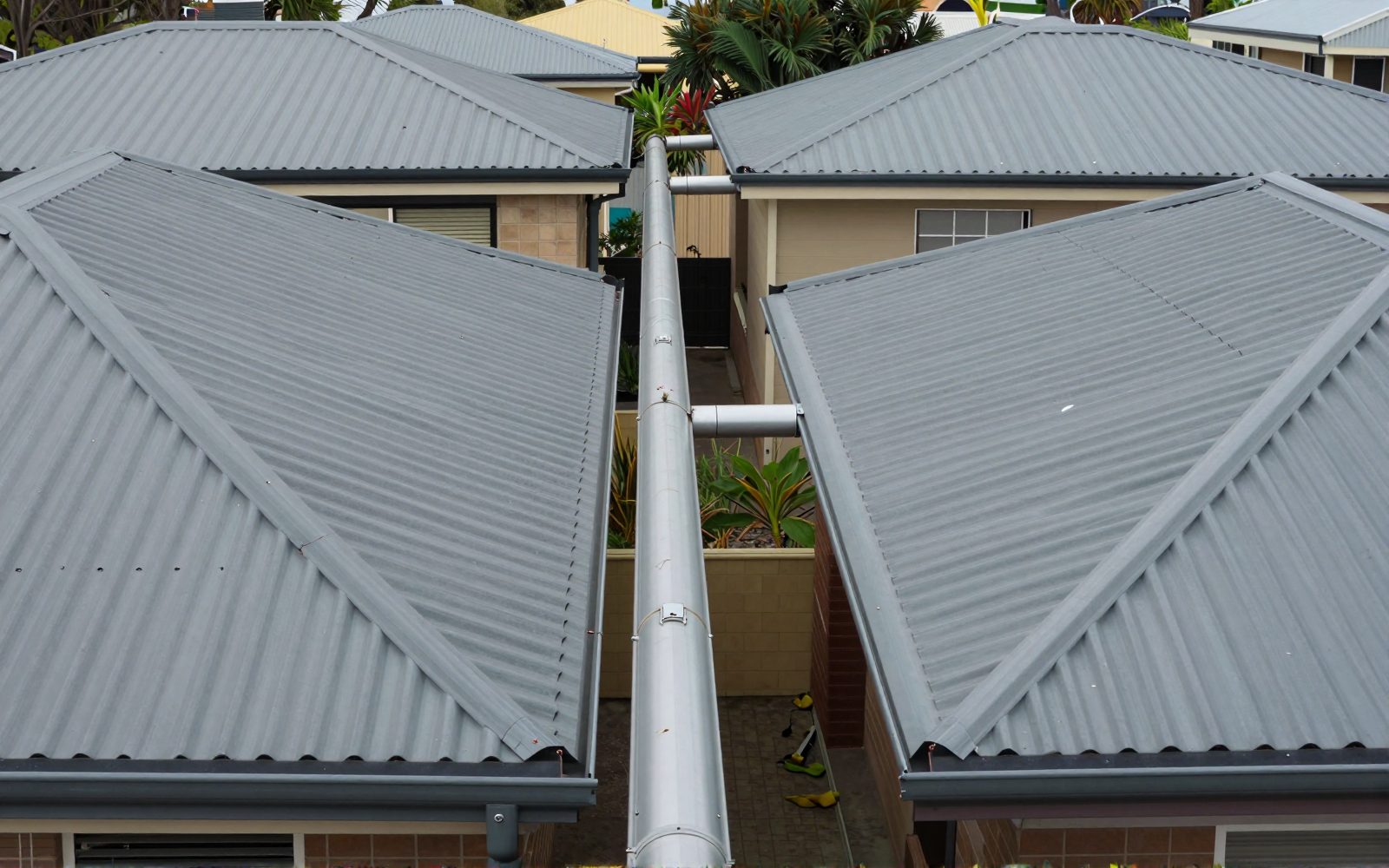
A box gutter is a flat-bottomed gutter that sits inside the roof line: between two roofs, behind a parapet or along a terrace. When it blocks, the water has nowhere to go but inside, which is why it needs an overflow.
What it is
Unlike an eaves gutter hung on the fascia, a box gutter is built into the roof, usually where two roofs meet or behind a parapet on a terrace. It drains to a sump and a downpipe or a rainhead.
Why they overflow
Leaves, a blocked sump or downpipe, or a downpipe too small for the roof area. Because the gutter is above the inside of the house, an overflow goes into the ceiling or walls.
What the code says
The ABCB's Understanding the NCC guide explains that the NCC 2022 Housing Provisions no longer provide the design requirements for box gutters. The route it identifies is design and installation to AS/NZS 3500.3, or a developed Performance Solution. A roof plumber or designer must establish the applicable code edition and state variations for the actual work.
That distinction matters when reading online advice. The familiar eaves-gutter tables, gutter fall examples and downpipe-spacing check are not a box-gutter design. A replacement needs its own drainage assessment, including the roof area feeding it, local rainfall, outlets and an overflow route. Do not size one from a photograph of a similar house.
Box gutter, valley gutter or square-front gutter?
The names can cause expensive misunderstandings when asking for a quote. A square-front eaves gutter may look like a box from the street, but it still hangs along the outer roof edge. A valley gutter follows the junction of two sloping roof surfaces. An internal box gutter collects water within the roof arrangement, often behind a parapet.
Tell the contractor where the gutter sits rather than relying on its name. A photograph from ground level and a simple sketch showing which roof sections drain towards it are useful starting points. The inspection still needs to establish the actual construction; a street photograph cannot show concealed outlets, lining or support.
The immediate question is where water can go if the normal outlet stops taking it. On an internal arrangement, the answer must come from the drainage design. A neat paint finish or a recently renewed sealant bead does not answer that question.
What replacing one costs
Yakka Labour puts a custom-folded box gutter at about $150 to $350 per metre installed in 2026, against $45 to $95 for an ordinary Colorbond eaves gutter.
Treat that as a published budgeting range, not a measured average or a quote for your roof. An internal gutter is not automatically priced like an exposed, easily reached run around a single-storey house.
For a hypothetical eight-metre run, multiplying the published box-gutter range gives $1,200 to $2,800. That arithmetic only illustrates the length component. It does not establish whether access, outlets, adjoining roof work, disposal or concealed damage are included. Ask for the actual job total and exclusions before comparing it with another offer.
Our gutter replacement cost guide covers ordinary perimeter gutters and the other items that can appear on a replacement quote. Keep the distinction between the two systems when comparing prices.
Repair or replacement: what the inspection needs to answer
Ask the inspector to identify the failure before choosing a product or repair method. Useful questions include whether water is passing through a damaged section, backing up at an outlet, escaping at an adjoining flashing, or exceeding the drainage arrangement during rain.
A repair proposal should explain which observed defect it addresses. If the proposed work is a local patch, ask what condition the remaining run is in and whether the same issue appears elsewhere. If the proposal is a complete replacement, ask which existing parts will remain and how the new work connects to them.
Separate repairs to water entry from repairs to the resulting ceiling or wall damage. Repainting a stain is a different item from finding and resolving the source. Where the leak location is unclear, the roof leaking guide explains the information to record before an inspection.
A quote brief you can give a roof plumber
Write down when the leak occurs, which room is affected, whether the problem follows heavy rain, and what previous repairs were attempted. Include dated photographs taken safely from inside or ground level. Leave roof access and inspection of concealed areas to the contractor.
Ask the written quote to identify:
- The gutter section being repaired or replaced, including its measured length.
- The proposed material and how its compatibility with adjoining roof components will be checked.
- Whether the sump, rainhead, outlets, downpipes and overflow arrangement are retained or changed.
- Access and protection arrangements, including work around neighbouring property where relevant.
- Roof sheets, flashings, ceilings or other adjoining items excluded from the price.
- Removal of old materials, the job total including GST, and what happens if concealed damage is found.
These are comparison questions, not a substitute for a design. Two prices only become comparable when they describe the same scope. Keep a copy of the agreed scope and the contractor's explanation of the drainage arrangement with your house records.
Common questions
What is the purpose of a box gutter?
To collect water where an eaves gutter cannot go: between two roofs, behind a parapet, or along a terrace roof.
Are box gutters a problem?
Only when they block or are undersized, because they overflow inside. Keep them and their sumps clear and make sure they have an overflow.
Sources
- Yakka Labour, Gutter replacement cost guide (October 2026)
- Australian Building Codes Board, Understanding the NCC: gutter and downpipe provisions for housing (October 2023)
Checked 15 October 2026. Prices are published ranges, not quotes; rules differ by state.