Leaks
Roof leaking? What to do tonight, how to find it, what the fix costs
Keep people clear of wet electrical equipment and damaged ceilings, stay off the roof, and seek appropriate emergency help. Once the area is safe, a roofer can investigate the entry point and distinguish temporary protection from a permanent repair.
Tonight
- Keep clear of electrical hazards. Do not touch wet electrical equipment or approach it with wet hands or while standing in water. Seek professional help if water is near lights, wiring or the switchboard.
- Keep clear of damaged ceilings. Move people away from sagging or visibly damaged areas. Do not push, puncture or stand underneath them to investigate.
- Stay off the roof. Do not climb up to place a tarp or inspect damage. For NSW storm emergency assistance, call 132 500. For a life-threatening emergency, call 000. Use your state's emergency guidance elsewhere.
- Limit further damage only where safe. Move belongings and place a container under a drip only if doing so does not take you into a hazardous area. Protecting contents comes after protecting people.
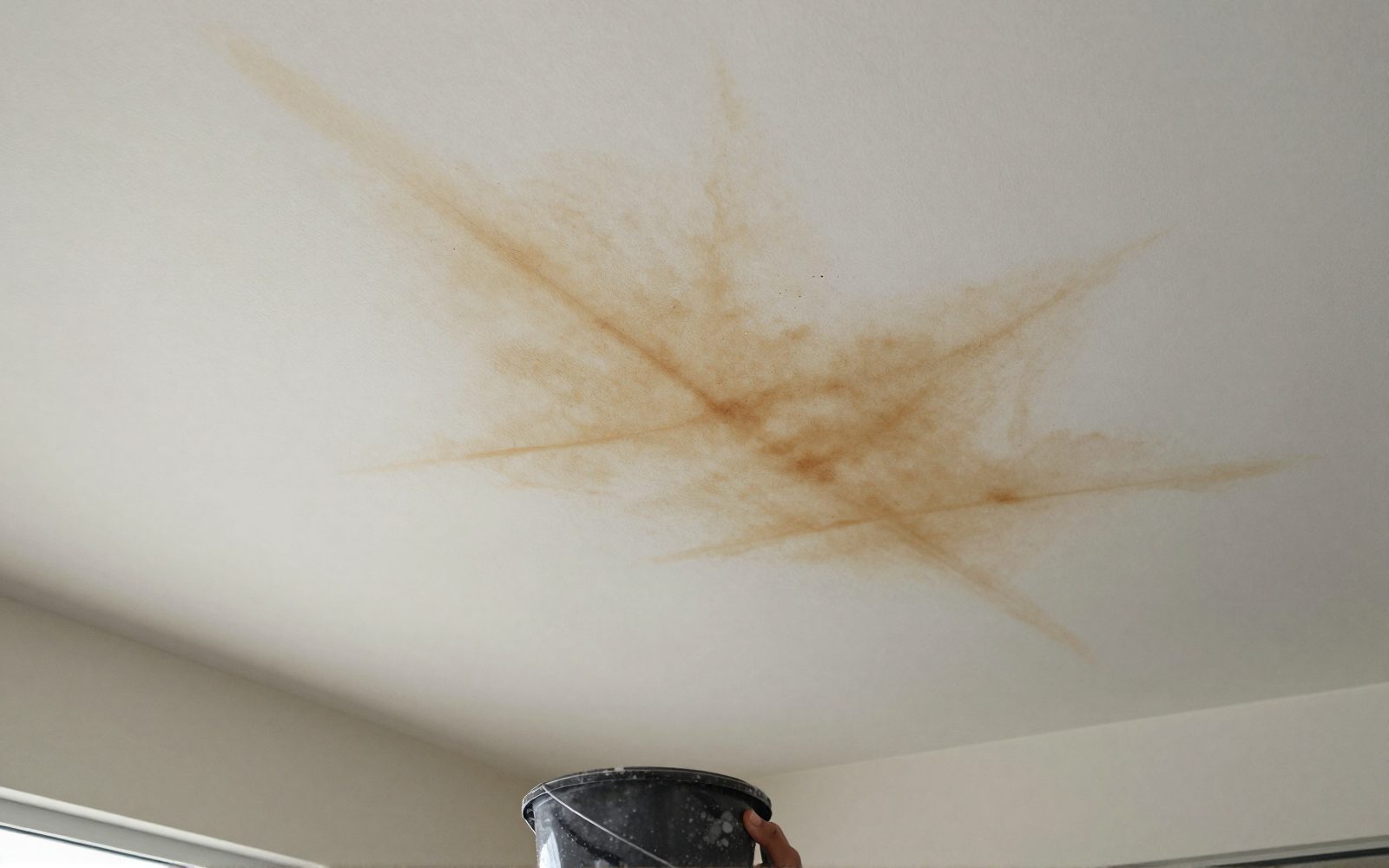
Where leaks come from
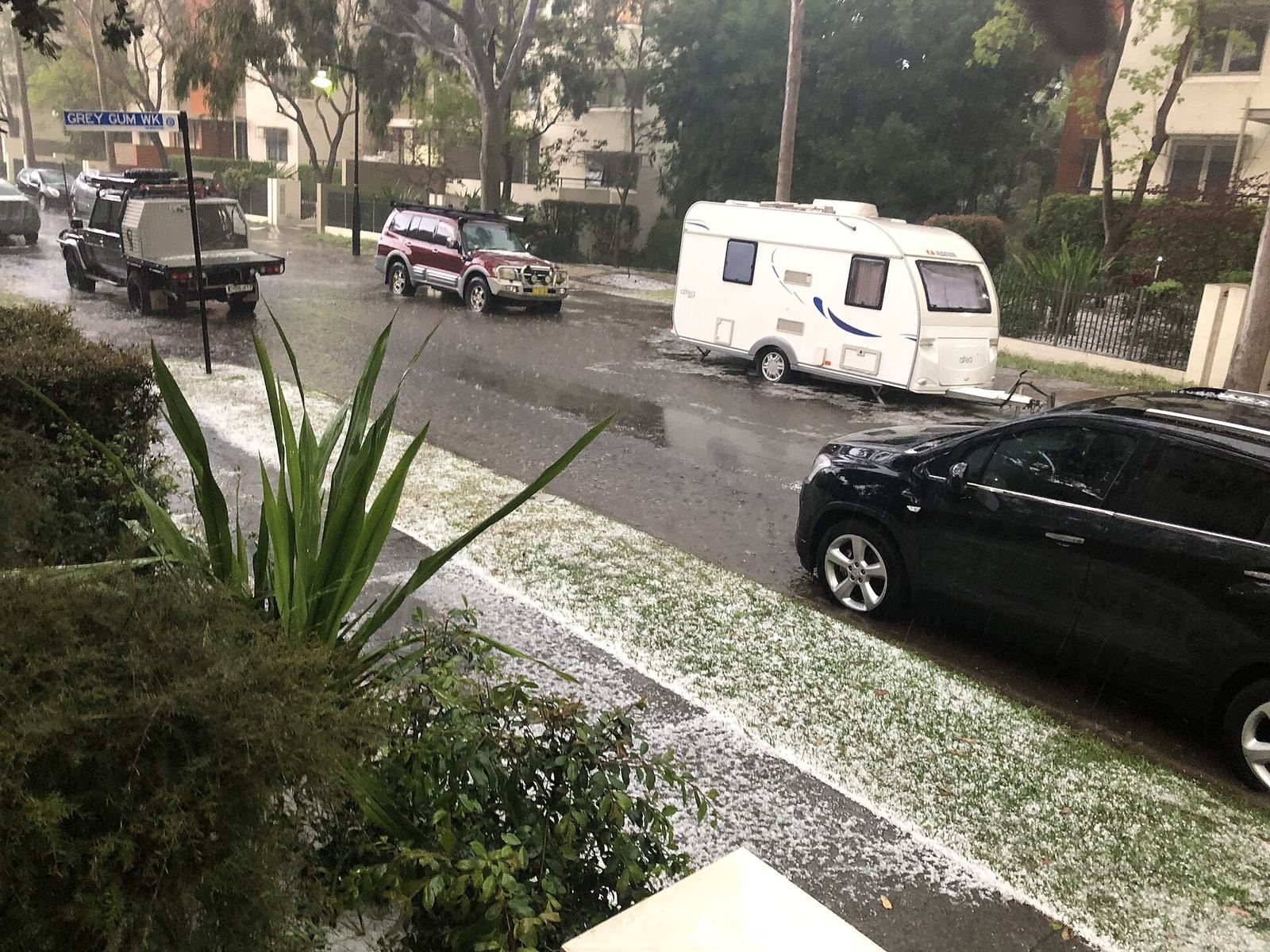
Hail, wind or earlier roof defects may be relevant to the inspection. Record what happened and any damage visible safely from inside or ground level; do not enter a damaged roof space or climb onto the roof to look for evidence.
| Source | Signs | Fix |
|---|---|---|
| Cracked or slipped tiles | Leak in steady rain, a damp patch under one spot | Replace tiles, rebed ridges |
| Failed flashing | Leak beside a wall, chimney or skylight | New or resealed flashing: roof flashing |
| Overflowing gutters | Water inside walls or at the eaves in heavy rain | Clean, re-fall or add downpipes: overflowing gutters |
| Box gutters | Leaks on terraces or between roofs | Box gutters |
| Rusted metal or loose screws | Leaks on older metal roofs | Replace screws or sheets |
How it is found
A professional investigation may compare the interior damage with roof junctions, coverings and drainage, using access appropriate to the condition of the building. The stain's location is a starting point, not proof of the entry point. Ask the contractor to explain the evidence supporting the proposed repair.
Getting the right help
Before comparing prices, distinguish the immediate response from the investigation and permanent work. The following questions help organise those stages without assuming that every leak needs the same repair.
Who to contact when rain is coming in
For NSW flood, storm or tsunami emergency assistance, the SES number is 132 500; a damaged or leaking roof is among the situations its contact page describes. A life-threatening emergency belongs with 000. Follow current emergency instructions rather than waiting for an ordinary roofing appointment where there is immediate danger.
For a repair after the emergency, arrange an appropriately qualified roofing contractor and explain any immediate access or electrical concerns. If you rent or live in a managed building, notify the property manager or responsible building contact promptly as well. This guide does not authorise a tenant or individual apartment owner to order work on someone else's roof.
Keep the roles clear when making calls: emergency assistance concerns the immediate situation, the roofer investigates and repairs the roof, and an electrician assesses affected electrical equipment. An attendance by one does not automatically complete the others' work.
Water near a light fitting or switchboard
NSW SES says water-affected electrical connections and appliances should be inspected by a licensed electrician before use. It also warns against reconnecting damaged or disconnected services yourself. A roof repair does not establish that the affected electrical installation is safe.
Describe where the water is appearing when requesting help. Do not touch the fitting, move wet electrical items or attempt to reach a switchboard through an unsafe area. Do not assume the absence of sparks or a power outage makes the situation safe to investigate yourself.
Once the immediate hazard has been addressed, keep the electrical assessment separate from the roofing scope. Your records should show which work concerns stopping the water entry and which concerns equipment or wiring affected by it.
Record the pattern without guessing the cause
A short record of observations can make an inspection more useful. Note the date, approximate time, room, location and weather. Photographs taken safely from the room or ground level can help explain whether the stain is new, enlarging or appearing at several points.
Useful observations include whether water appears during every shower, only prolonged rain, or rain accompanied by wind from a particular direction. Note recent work around a skylight, chimney, solar equipment, an extension or the gutters. These details describe a sequence; they do not establish who is responsible or which component has failed.
For example, "water appeared beside the skylight after wind-driven rain" is an observation. "the skylight needs replacing" is a conclusion requiring an inspection. Keeping the distinction clear helps the roofer investigate rather than start with an assumed repair.
Do not create a test by hosing a damaged roof yourself. Ask the contractor what investigation is appropriate, whether access is safe and what the investigation includes before ordering permanent work.
Why the stain and the roof defect may not line up
The visible room location identifies where water has reached the interior. It does not show every part of its route through the building. A roof plan, room sketch and inspection findings are more useful together than one photograph of a ceiling stain.
Ask the inspector to identify the roof plane or junction being discussed. A house can have several adjoining slopes, valleys and extensions above a relatively small interior area. If the proposed repair concerns a different position from the stain, ask for the explanation and supporting findings rather than assuming either location is automatically correct.
Where more than one issue is found, have the scope distinguish them. An obstructed outlet, damaged covering and a deteriorated flashing could require different work. A quote should not leave you guessing whether it addresses all the findings or only one of them.
Temporary protection is not the permanent repair
If emergency work is arranged, ask what was done, what area it protects and what further work remains. Keep any attendance record and photographs supplied by the provider. Do not access a roof to check or adjust temporary protection yourself.
When booking the follow-up inspection, explain that temporary work is in place and provide the record. Ask the roofer to distinguish removal or adjustment of that protection from the permanent repair. If another contractor needs to attend, make the existing arrangement clear before their visit.
The permanent scope should identify the defect found and proposed work, including any adjoining components that need to be moved or reinstated. A statement such as "roof made safe" should not be treated as proof that every leak, concealed defect or resulting internal damage has been repaired.
Read the repair proposal against the finding
For a flashing issue, ask which junction and components are affected; see roof flashing. For a gutter issue, the explanation should distinguish cleaning, an outlet obstruction, condition and drainage alterations; see gutters overflowing.
For a box gutter, make sure the scope identifies the internal drainage arrangement rather than pricing it as an ordinary exposed eaves gutter. Our box gutter guide explains that distinction and the importance of its drainage design.
For a covering repair, ask which sheets, tiles, fixings or adjoining details are included and what remains in place. A local repair and a complete replacement are different proposals. If replacement is recommended, ask how the inspection supports that extent of work.
These questions help you understand a diagnosis; they are not instructions to replace components yourself. The right work depends on the roof, its condition and the applicable requirements.
Compare the quoted costs
Repairs depend on the cause. A full re-roof is a different job: Yakka Labour puts a typical Australian re-roof at $18,000 to $45,000 in 2026 (about $85 to $250 per square metre). See roof replacement cost and restoration.
That is a publisher's indicative replacement range, not a price for fixing tonight's leak. An inspection fee, emergency attendance, temporary protection and permanent repair may be separate items. Ask which are included in the amount being quoted, whether GST is included and what could trigger further investigation or work.
Do not compare a small repair quote directly with a whole-roof figure. Compare the identified work, access arrangements, adjoining repairs, exclusions and completion documents. If the cause is still unknown, ask what the first investigation will establish and how a subsequent proposal will be agreed.
Keep roof repairs and internal restoration separate
A roof contractor's scope may not include wet insulation, plasterboard, paint, flooring or electrical equipment. Record those affected areas and clarify who will assess each one. Do not cover over visible damage merely to make the room look finished while the cause is still unresolved.
If making an insurance enquiry, give the insurer the observations, dates and records you actually have. Ask what information it needs and how it handles proposed work; this guide makes no claim that a particular leak or repair is covered by your policy. Do not delay action needed to protect people while waiting for a routine claim response.
Keep the investigation findings, agreed repair scope and completion record together. If water appears again, describe the new event and refer to that scope. A fresh stain needs reassessment; its appearance alone does not prove that the original repair failed or that the whole roof now needs replacing.
Common questions
What should I do if my roof is leaking?
Keep clear of wet electrical equipment and damaged ceilings, stay off the roof, and seek appropriate help. In NSW call 132 500 for storm emergency assistance, or 000 for a life-threatening emergency.
Is it normal for a roof to leak in heavy rain?
Water entry needs investigation. Record when and where it occurs and have the roof and drainage assessed rather than assuming that heavy rain explains away the problem.
Sources
- NSW State Emergency Service (storm damage: 132 500)
- NSW State Emergency Service, Contact NSW SES
- NSW State Emergency Service, Electricity, gas and water safety information
- SafeWork NSW, Plumber falls from roof while cleaning gutters (21 March 2025)
- Yakka Labour, Roof replacement cost guide (October 2026)
- Australian Building Codes Board, Understanding the NCC: gutter and downpipe provisions for housing (October 2023)
Checked 15 October 2026. Prices are published ranges, not quotes; rules differ by state.