Roofs
Roof flashing: every type, and where leaks start
Roof flashing protects junctions and edges: where a roof meets a wall, chimney, skylight or pipe, and where sheets or tiles finish. The shape, material and way it overlaps the adjoining roof all matter.
The types
| Flashing | Where | What it does |
|---|---|---|
| Apron | Where a sloping roof meets a wall below it | Turns down over the roof to shed water away from the wall |
| Barge | Along the sloping edge at a gable end | Covers the edge of the roof sheets or tiles |
| Step | Where a roof runs up beside a wall | Steps up with each tile course |
| Counter | Over another flashing, into the wall | Covers the top edge of the flashing below |
| Parapet capping | Top of a parapet wall | Sheds water back onto the roof |
| Lead | Around chimneys and on tile roofs | Soft metal dressed to the tile shape |
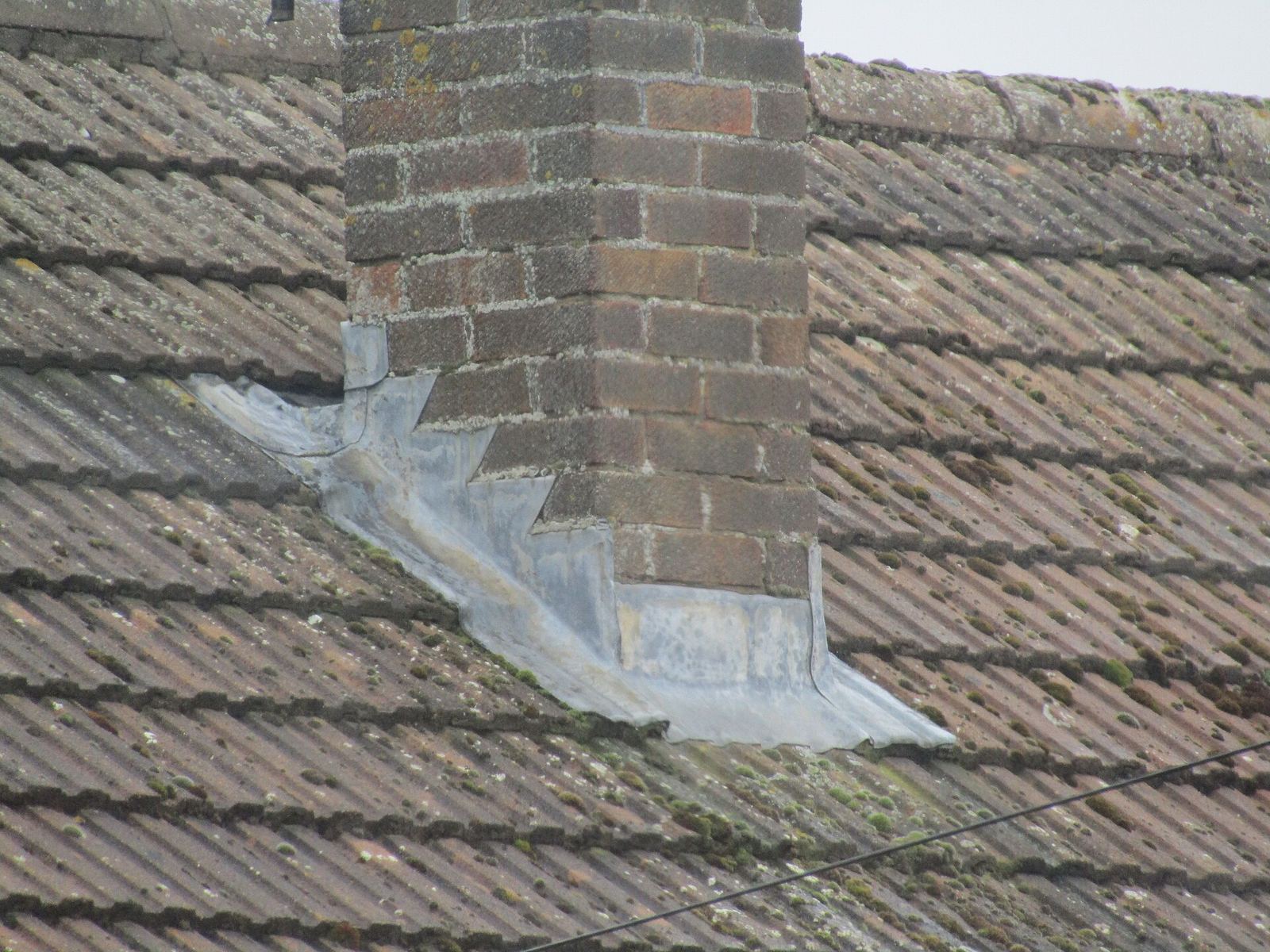
Where leaks start
Damage, corrosion, displaced components or an unsuitable junction detail are possible reasons to investigate a flashing. A visible sealant crack does not establish the whole cause, and adding sealant is not automatically the right repair. The inspection needs to identify how water is entering and what condition the surrounding roof is in.
The names describe different things
Apron, barge and counter flashing describe a position or function. Lead describes a material. A quotation that says only "new flashing" leaves both the location and specification unclear.
Start with the junction: roof to wall, roof to chimney, a pipe through a sheet, or the exposed edge at a gable. Then ask what flashing detail is proposed for that roof covering. A detail suitable for one profile or junction is not a template for every roof.
Lysaght's installation manual gives flashing drawings within its metal-roof system guidance. Use the drawings to understand a contractor's explanation, not to choose a universal fold or overlap measurement from an unrelated roof. The installer needs to work with the actual product, geometry and project requirements.
Apron and wall-junction flashings
An apron flashing sheds water over the adjoining roof at a junction. The important question is how that junction meets the wall and roofing, including the part that is concealed. The visible strip is not necessarily the whole assembly.
When requesting an inspection, describe whether water appears beside the wall, at a corner or below a penetration. Photograph the interior symptom safely and mark its location on a simple room sketch. Leave the assessment of the roof-side detail to the roofer rather than trying to lift or reshape it.
Counter flashing
A counter flashing protects the upper edge of another flashing at a wall or similar junction. If a contractor proposes replacing one part while retaining another, ask which components remain and how their condition was assessed.
This distinction is useful around chimneys. "Reseal chimney" could describe several different tasks; ask whether the proposed work concerns masonry, the roof junction, a flashing component or another identified defect. Keep that explanation with the quote so later work does not start from an ambiguous description.
Barge and parapet details
Barge flashing follows the sloping roof edge at a gable. Parapet capping covers the top of a wall extending above the roof. They occupy different locations and should not be treated as interchangeable pieces simply because both are folded metal.
Ask a replacement quote to identify the affected lengths and junctions. If new metal meets existing roof sheets or wall components, the specification needs to explain those connections. A price for a visible straight length may exclude corners, returns or work needed to reach adjoining concealed parts.
Material compatibility is part of the specification
Skylight flashings must suit the roof and skylight
A proprietary skylight flashing is selected as part of that manufacturer's system. VELUX, for example, supplies different flashing arrangements for roof types and publishes product-specific installation instructions. Its range should not be read as one kit suitable for every roof pitch, sheet profile or skylight model.
When a quote includes skylight flashing work, ask for the skylight model and proposed flashing arrangement to be identified. Confirm whether the contractor is retaining the existing unit or replacing it. That makes it possible to check the relevant manufacturer's instructions rather than choose a flashing solely from the visible roof colour or a generic kit name.
Lysaght's flashing guidance refers readers to its material-compatibility advice. The relevant question is whether the proposed flashing and its surrounding components are suitable together, including materials upstream in the path of rainwater.
Do not assume that a traditional material is appropriate for every modern roof, or that matching the visible colour proves compatibility. Ask the installer to name the material and coating and explain any changes from the existing detail.
For a partial repair, record which old components remain. That makes the compatibility question specific: the new flashing must be considered as part of the roof it joins, not just as a standalone item on an invoice. The same applies where a later extension introduces different roofing materials beside an older roof.
A flashing leak is an inspection finding, not a ceiling location
A water stain near a chimney or wall is useful information, but it does not by itself establish the entry point. Ask the inspector to explain what evidence connects the symptom to the proposed repair.
Record whether the problem happens in every shower, only during heavy rain or with wind from a particular direction. Note any recent work around solar equipment, a skylight, an extension or a roof repair. Describe the sequence without assuming which trade caused the issue.
The roof leaking guide covers the immediate response when water enters the house. Once the situation is safe, the repair brief should distinguish investigation of the entry point from restoration of wet ceilings, insulation or finishes.
Repair, replacement or a wider roof job?
Ask what condition the inspection found and how much of the detail is affected. A localised defect and a junction that needs redesign are different scopes. A whole-roof replacement and a single flashing replacement are different scopes again.
If a local repair is proposed, ask what it addresses, what remains in place and which observed issues fall outside that work. If replacement is proposed, ask whether adjoining roof sheets or tiles need to be moved and reinstated. The useful explanation names the work rather than promising a generic permanent fix.
Compare quotations on that written scope. A cheaper offer might involve a different task rather than a lower price for the same result. Conversely, a larger proposed job needs an explanation of why the inspection supports it. Ask for that explanation before deciding on the method.
What to ask for in a flashing quote
The quote should make the location identifiable without relying on a conversation on the day. A marked photograph or sketch can help distinguish the rear wall junction from a chimney or gable edge elsewhere on the same roof.
Ask it to state the proposed material, affected length or components, access arrangements, removal and disposal, and work to adjoining roof or wall finishes. Confirm whether the price includes the investigation already performed or whether a further inspection has been allowed separately.
Where the contractor identifies hidden conditions that cannot yet be assessed, ask how further work would be discussed and priced. Keep the roof repair separate from internal decoration so it is clear which contractor is responsible for which result.
Understanding the completed work
At handover, ask the contractor to identify what was replaced or repaired and any parts that remain subject to monitoring or further work. Photographs supplied by the contractor can help document inaccessible junctions without requiring you to access the roof.
Keep the product details, scope, invoice and any applicable completion documents together. If another contractor inspects the roof later, that record gives them a starting point beyond "the flashing was fixed last year".
If symptoms return, record the weather and location again and contact the contractor with the earlier scope. Do not assume that either the old repair or an entirely new defect is responsible before the roof is reassessed.
Who does it
Installing, replacing and testing flashing is part of licensed roof plumbing work in Victoria (the Roofing (stormwater) class), and licensed work in other states over set values. See what roof plumbing is.
Common questions
What is apron flashing?
The flashing where a sloping roof meets a wall: it runs down the wall and over the roof surface to shed water away from the join.
What is barge flashing?
The flashing along the sloping edge of a roof at a gable end, covering the edge of the sheets or tiles.
Sources
- Building and Plumbing Commission Victoria, Roofing (stormwater) work
- Master Plumbers, Your questions answered (HB 39)
- Lysaght, A guide to metal flashings
- Lysaght, Roofing and walling installation manual, section 11 Flashings
- VELUX Australia, Flashing systems and installation instructions
Checked 15 October 2026. Prices are published ranges, not quotes; rules differ by state.